













Use Cases of SPEI for business in Mexico
Using SPEI for businesses in México and their treasury operations has three main advantages: improved control, capital, and time.
On the surface, your traditional payments “work.” Suppliers eventually receive their money, payroll gets paid, operations continue. But there’s a critical difference between functioning and competing.
You can learn what SPEI is, how it works, and what its components are on our blog.
Whether you use SPEI indirectly—manually navigating multiple portals and reconciling transactions one by one—or rely on methods like checks and bank-hour transfers, the result is a real cost that erodes your company’s competitiveness.
How much does it cost a company to maintain a manual financial system?
The cost of maintaining a manual financial system is high, both in terms of expenses and human resources, which translates into hours spent preparing for transactions, as well as hours spent on reconciliation afterward:
But the real cost goes beyond that. While your team processes payments manually, your competitors have already automated with modern payment processors and are dedicating that time to strategic analysis, developing new solutions, or working on new projects.
The Invisible Impact of Capital Mobilization: The Float Trap
In the financial world, float refers to the phenomenon of temporary double-counting: it is money that appears simultaneously in the books of both the issuer and the recipient, yet is not available to either party.
Technically, it is capital held up by the processing time of traditional banking channels.
When your money is “in transit,” an operational standstill occurs: the balance appears on your screen, but it is not released.
This means that funds are locked up in clearing and settlement processes; they are in a digital limbo where they generate no returns and cannot be transferred to cover emergencies or investments.
The contrast between traditional methods and immediate availability is critical for cash management:
- Checks: Generate a 3- to 5-day float while authenticity and funds are verified.
- Traditional transfers: Take 24 to 48 hours to clear, depending on banking hours.
- Credit cards: Require 2 to 5 days for the settlement to take effect in your account.
Every hour your capital spends in transit is a missed opportunity.
While cash in transit is a static and vulnerable asset, released capital is a real-time execution tool that allows you to take advantage of supplier discounts, react to volatile markets, or process payroll seamlessly.
Having a connection to SPEI eliminates the need to transfer funds days in advance to ensure compliance, allowing companies to generate returns or meet urgent obligations with their available capital right up until the exact moment of settlement.
This ability for immediate execution transforms cash management, reducing exposure to idle capital and providing operational flexibility that traditional systems cannot offer.
What types of companies can use SPEI for their operations?
Any type of company can use SPEI for its operations. From a Mexican company to a foreign one that needs to move funds to pay suppliers or disburse payroll to employees in Mexico.
Using SPEI in an automated manner offers a unique opportunity to optimize cash flow in B2B operations and payments.
The question is not whether you can use SPEI, but how you can leverage it strategically based on your business model and stage of growth:
Can a foreign company operate in Mexico using SPEI?
Yes, through Virtual Balance Accounts connected to SPEI. Companies worldwide can execute payment transactions in Mexico without a local entity or traditional bank accounts.
How it works:
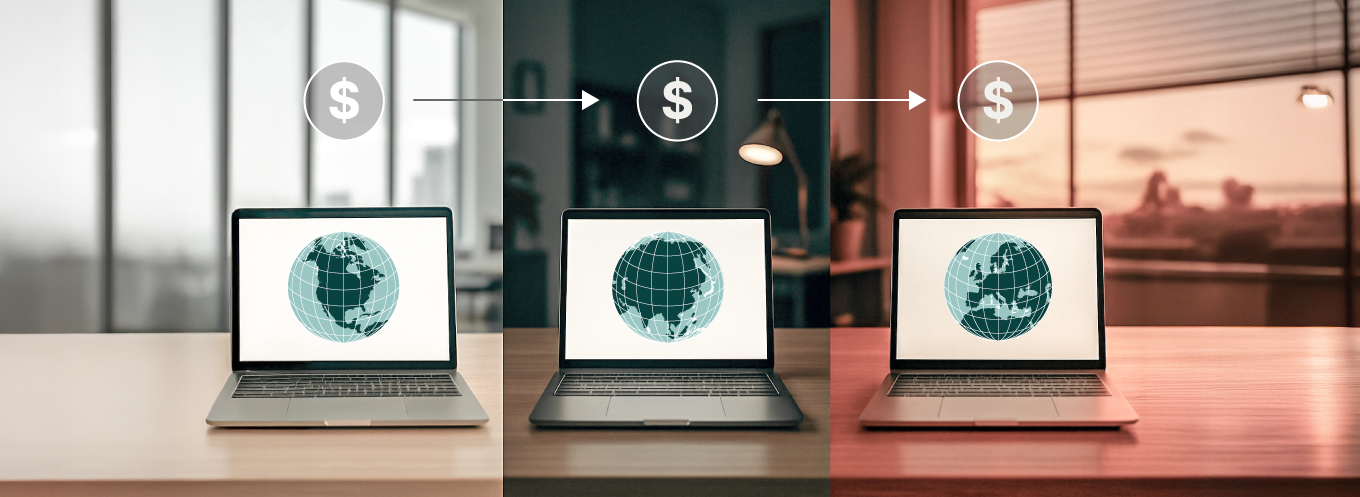
Cobre provides MXN-denominated Virtual Balance Accounts that function as operating balances in Mexico.
These balances are directly connected to SPEI, Mexico’s instant payment system, enabling local disbursements and collections with real-time settlement.
The operational flow is straightforward:
- Funding from other currencies (COP, USD, EUR, or CNY)
- 24/7 conversion
- Crediting to the Virtual Balance in MXN
- Execution of bulk payments via SPEI with immediate settlement
The traditional approach involves:
- Establishing a Mexican entity: 6–12 months, and high operational costs at every stage of the money transfer process.
- Payments via SWIFT: 2–5 day delay with high transfer fees
- Management of multiple banking relationships and physical accounts
With Cobre, you can operate from anywhere in the world with the ability to move money both internationally (USD, COP, EUR, CNY) and locally in Mexico via SPEI, creating frictionless hybrid payment flows without the need for investment in local infrastructure.
What are the benefits of using SPEI for business competitiveness?
The difference between simply operating and truly competing lies in the mobilization of capital. With an automated electronic transfer system, the "float" associated with traditional methods is eliminated:
- Capital release: Since settlements occur in seconds, you don’t need to fund accounts days in advance to ensure compliance.
- Strategic relationships: Timely payment via bank transfer allows you to take advantage of early payment discounts and builds trust with suppliers.
- Security of interbank transfers: Traceability is absolute thanks to Banxico’s CEP, which reduces the risk of internal fraud and ensures regulatory compliance.
- International interoperability: Ability to take advantage of opportunities such as early payment discounts, strategic negotiations with suppliers, or simply the peace of mind of having liquidity when you need it.
What does SPEI look like in practice?
With SPEI, there are four practical applications: bulk payroll disbursement, supplier payment management, and international or cross-border transfers.
The true value of SPEI lies in how companies use it to transform critical day-to-day operations through measurable practices and tangible results in treasury.
SPEI for Mass Payroll Disbursement
The traditional payroll process takes between 40 and 50 hours per month for companies with more than 500 employees. Between preparing files, navigating multiple banking portals, and the 2–3 day “safety margin” before payday, it results in a tedious process that ties up capital unnecessarily.
An automated SPEI enables a BPO firm with 5,000 employees to reduce its payroll processing time from 72 hours to just 3 hours.
This process represents a potential 96% improvement, combining a reduction in processing time with the elimination of traditional bank fees.
Payments can be disbursed on payday itself, even minutes before if necessary. Each employee would receive instant confirmation, and the company would obtain the transaction reference number (CEP) for every transaction for complete tax documentation.
Supplier Payment Management
While traditional methods require initiating payments 3 to 5 days in advance, SPEI allows you to retain capital until the exact moment of payment.
For a company with $50 million pesos in monthly supplier payments, this could free up approximately $5 million in constantly available working capital.
The benefits go beyond capital:
- Early payment discounts: Now available when paying instantly
- Improved relationships: Suppliers value certainty and punctuality
- Automation with ERP: Direct integration eliminates manual processes
- Robust governance: Digital approvals and full traceability
SPEI + Cross-Border + Rate Lock: Unified Infrastructure for Payments in Mexico
With a modern operational architecture like Cobre—which combines local systems such as SPEI in Mexico, with intelligent cross-border orchestration and consolidated dashboards—it is possible to achieve strategic cross-border operations that maximize returns and minimize financing costs.
This includes automatic settlement: instant conversion from USD to MXN with funds immediately available, and the ability to operate 24/7, even when traditional markets are closed.
However, even with these advanced operational capabilities, there is a time lag between the moment you decide to execute the transaction and when you actually fund your account in dollars or your local currency.
We are referring to the exchange rate volatility that affects any international transaction.
Tools like Rate Lock add a layer of certainty to the exchange rate: locking in the exchange rate for the exact moment the international transfer is made, regardless of whether you’re trading during or outside market hours.
This way, no matter what the market does in the coming hours, you’ll know exactly how much it will cost to send those Mexican pesos.
This is the difference between operating with speed and operating with speed and control.
How can SPEI be enabled for operations in Mexico?
Successful implementation of SPEI requires more than just technical access; it demands a partnership with a robust payment infrastructure that knows how to operate within local and regional payment networks.
Cobre offers its services through an API that operates 24/7. With Cross-Border Payments, you receive funds directly in USD from your parent company and convert them to Mexican pesos with complete transparency. Through Local Payments, you disburse that same balance via SPEI on the same day. This eliminates the 2- to 5-day wait and high transaction fees of the traditional SWIFT system.
This means you can operate, settle accounts with suppliers, and pay payroll with the same efficiency as an established local entity.
Additionally, you can centralize all your Banorte, Santander, and BBVA bank accounts through Connect.
With Cobre Connect, you have a unified platform where you can centralize and automate your operations:
- Real-time automatic reconciliation.
- Complete visibility.
- Maximum security with strong authentication.
- Strategic decisions facilitated by intelligent reports.
How does a payment infrastructure contribute to your SPEI operation?
Regardless of a company’s profile, integrating with SPEI using a payment infrastructure like Cobre helps optimize time, reduce costs, and ensure traceable available capital.
While traditional methods force companies to “operate” under the constraints of float and manual operational burdens, the use of a robust infrastructure allows companies to compete through capital mobility.
In summary, the contribution of an infrastructure like Cobre’s to your operations boils down to three main pillars.
- Freeing up capital and eliminating the float: A direct connection to local payment rails like SPEI allows your company to regain control of its liquidity. It eliminates the digital limbo of payments in transit and makes capital available for transactions right up until the exact moment of settlement.
- Operational efficiency through automation: The infrastructure replaces manual processes with automated workflows via APIs or bulk files. This not only reduces errors and reconciliation times but also enables the processing of bulk payrolls in hours rather than days, ensuring full traceability with immediate access to transaction receipts (CEP).
- Cross-border interoperability: For companies with global or nearshoring ambitions, the payment infrastructure unifies cross-border operations with local payments. Tools such as Virtual Balances and Rate Lock allow you to fund operations from abroad (USD, COP, EUR) and disburse in MXN via SPEI on the same day at a guaranteed exchange rate. This eliminates the need for costly local legal structures or traditional SWIFT transfers.
Ultimately, integrating a payment infrastructure into your SPEI operation means moving from operational fragmentation to strategic centralization to execute bulk payments, settle suppliers, and distribute payroll with agility, backed by a robust system supporting operations.
FAQ´s about SPEI for Businesses
What is the maximum amount a business can transfer via SPEI?
Banco de México has not set a maximum limit for SPEI. Limits are determined by each bank or platform based on your profile.
Banks typically allow transfers ranging from $200,000 to millions of pesos per day for businesses. For very large amounts, some banks require prior authorization or a physical token.
Can SPEI be used for international transactions?
Yes, SPEI serves as the final link in international transactions for receiving funds.
To receive funds from abroad, the sender transfers the funds through an international network such as SWIFT or via a payment infrastructure connected to SPEI for immediate settlement.
For international transactions in different currencies, SPEI has an additional function for transferring USD called SPID: Interbank Payment System for Dollars.