



SPID is the technological infrastructure operated by the Bank of Mexico (Banxico) that enables electronic transfers in dollars between bank accounts within Mexico.
Unlike international transfers, SPID is a domestic channel designed specifically for corporations that require agility in their high-value transactions.
In the Mexican financial ecosystem, integration with global supply chains has created a critical need: to transact in U.S. dollars (USD) without leaving the country.
For years, this process was inefficient, slow, and costly. However, the Interbank Dollar Payment System (SPID) has arrived to transform corporate treasury operations.
SPID is not an open system available to the general public. Banxico designed it as a closed ecosystem to ensure security and regulatory compliance.
Only commercial and development banks can be direct participants. This means that entities such as brokerage firms or SOFIPOs, which typically participate in SPEI, do not have access to SPID.
Currently, 24 leading banks in Mexico—including BBVA, Banorte, Santander, Citibanamex, and Interca—offer this service to their corporate clients, according to Banxico’s latest update in October 2025.
For a large company, this means that its counterparty (supplier or third party) must also be a customer of one of these institutions and have the service enabled.
Although SPID was built using the robust architecture of SPEI, there are operational differences that impact treasury management:
The SPID system eliminates the need for foreign correspondent banks. In a traditional international transfer, the money travels through banks in the U.S., adding up fees and days of waiting.
With SPID, settlement occurs in the accounts that Mexican banks maintain at the Bank of Mexico.
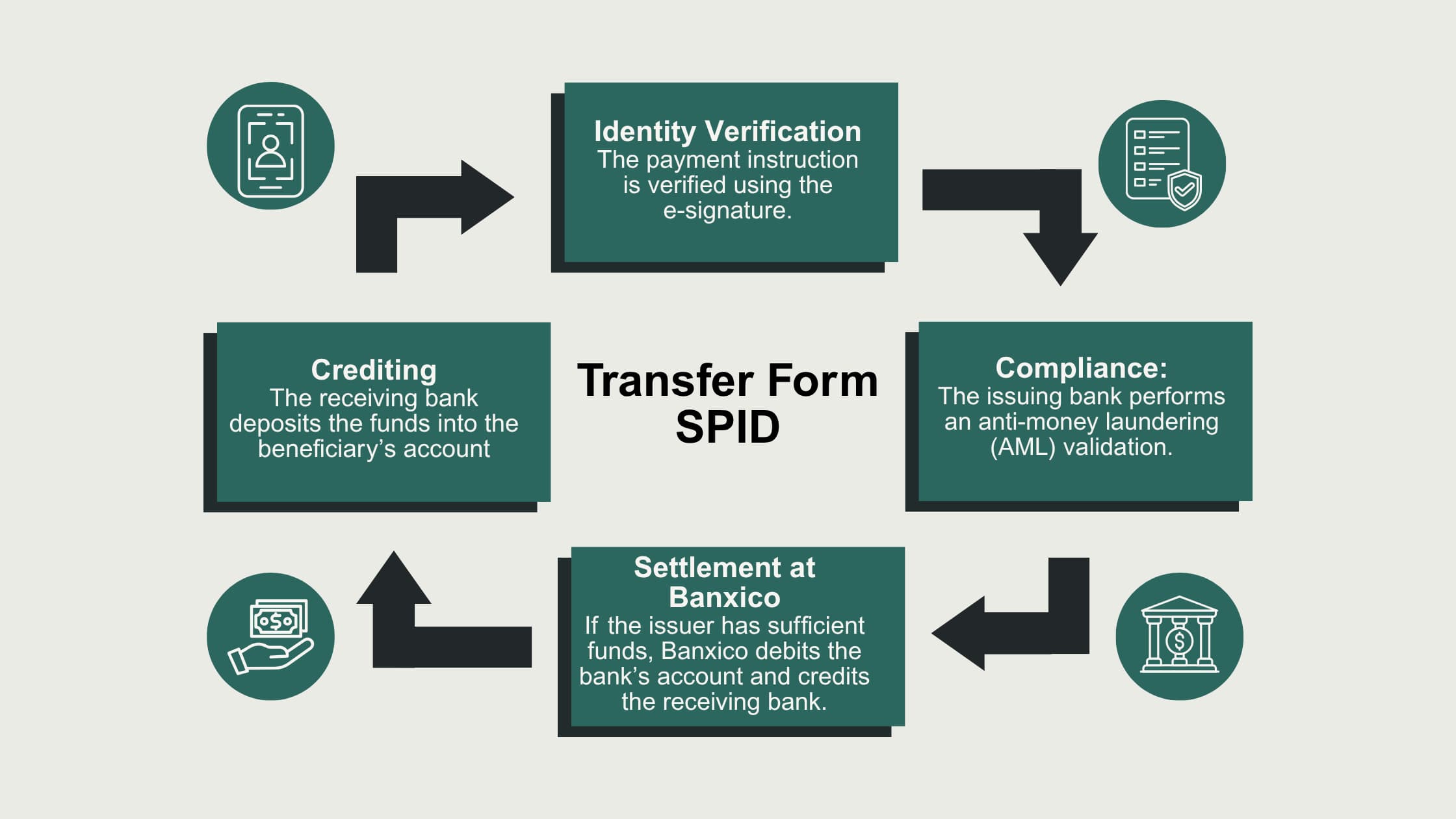
After the sending company initiates the payment via online banking, four steps are required to complete a SPID transfer:
The operating window is limited: business days from 8:00 a.m. to 2:15 p.m.
It is vital that chief financial officers (CFOs) plan their cash flows with this early closing time in mind. A payment initiated at 2:30 p.m. will not arrive until the following day, which may affect contracts with immediate payment clauses.
To enable SPID, having a dollar account is not enough. The company must comply with:
One of the cornerstones of SPID is its rigorous approach to preventing transactions involving funds of illicit origin. Unlike other systems, SPID’s requirements exceed many international standards:
SPID is the backbone of sectors that drive the Mexican economy:
In border states, it is common for a maquiladora to pay its local suppliers of packaging, logistics, or components in dollars. SPID allows these “local” dollars to move with the same efficiency as an SPEI.
These industries operate on "just-in-time" models. Interbank payments in U.S. dollars ensure that the supply chain does not come to a halt due to a lack of payment for freight or specialized inputs that are priced globally.
Large auditing or consulting firms that bill subsidiaries of multinational corporations in Mexico use SPID to receive their fees without losing money on the exchange rate differential when converting to pesos.
Despite its advantages, SPID has gaps that modern companies must address:
This is where payment management platforms like Cobre become indispensable. While SPID is a settlement channel, Cobre acts as a treasury orchestrator.
SPID represents a fundamental step forward for Mexico’s financial sovereignty, allowing the dollar to flow freely within our borders. However, for a company seeking scalability and total efficiency, the SPID is just one piece of the puzzle.
At Cobre, we enhance your financial infrastructure by eliminating the friction of banking hours and the complexity of managing multiple portals. We centralize your payments so you can focus on what really matters: growing your business.
It is a unique transaction identifier. Using this code and the transaction date, you can check the status on the official Banxico website or generate the CEP.
The Electronic Payment Receipt (CEP) is the legal document confirming that the transfer was successful. You can obtain it on the Banxico website by providing the Tracking Code and the institutions’ details.
Each bank sets its own rates. Generally, they are more expensive than an SPEI (ranging from $5 to $15 per transfer), but significantly cheaper than an international SWIFT transfer.
No. SPID is strictly USD to USD. Currency conversion must be done beforehand at your bank’s foreign exchange desk or online portal before initiating the SPID transaction.
SPID is the technological infrastructure operated by the Bank of Mexico (Banxico) that enables electronic transfers in dollars between bank accounts within Mexico.
Unlike international transfers, SPID is a domestic channel designed specifically for corporations that require agility in their high-value transactions.
In the Mexican financial ecosystem, integration with global supply chains has created a critical need: to transact in U.S. dollars (USD) without leaving the country.
For years, this process was inefficient, slow, and costly. However, the Interbank Dollar Payment System (SPID) has arrived to transform corporate treasury operations.
SPID is not an open system available to the general public. Banxico designed it as a closed ecosystem to ensure security and regulatory compliance.
Only commercial and development banks can be direct participants. This means that entities such as brokerage firms or SOFIPOs, which typically participate in SPEI, do not have access to SPID.
Currently, 24 leading banks in Mexico—including BBVA, Banorte, Santander, Citibanamex, and Interca—offer this service to their corporate clients, according to Banxico’s latest update in October 2025.
For a large company, this means that its counterparty (supplier or third party) must also be a customer of one of these institutions and have the service enabled.
Although SPID was built using the robust architecture of SPEI, there are operational differences that impact treasury management:
The SPID system eliminates the need for foreign correspondent banks. In a traditional international transfer, the money travels through banks in the U.S., adding up fees and days of waiting.
With SPID, settlement occurs in the accounts that Mexican banks maintain at the Bank of Mexico.
After the sending company initiates the payment via online banking, four steps are required to complete a SPID transfer:
The operating window is limited: business days from 8:00 a.m. to 2:15 p.m.
It is vital that chief financial officers (CFOs) plan their cash flows with this early closing time in mind. A payment initiated at 2:30 p.m. will not arrive until the following day, which may affect contracts with immediate payment clauses.
To enable SPID, having a dollar account is not enough. The company must comply with:
One of the cornerstones of SPID is its rigorous approach to preventing transactions involving funds of illicit origin. Unlike other systems, SPID’s requirements exceed many international standards:
SPID is the backbone of sectors that drive the Mexican economy:
In border states, it is common for a maquiladora to pay its local suppliers of packaging, logistics, or components in dollars. SPID allows these “local” dollars to move with the same efficiency as an SPEI.
These industries operate on "just-in-time" models. Interbank payments in U.S. dollars ensure that the supply chain does not come to a halt due to a lack of payment for freight or specialized inputs that are priced globally.
Large auditing or consulting firms that bill subsidiaries of multinational corporations in Mexico use SPID to receive their fees without losing money on the exchange rate differential when converting to pesos.
Despite its advantages, SPID has gaps that modern companies must address:
This is where payment management platforms like Cobre become indispensable. While SPID is a settlement channel, Cobre acts as a treasury orchestrator.
SPID represents a fundamental step forward for Mexico’s financial sovereignty, allowing the dollar to flow freely within our borders. However, for a company seeking scalability and total efficiency, the SPID is just one piece of the puzzle.
At Cobre, we enhance your financial infrastructure by eliminating the friction of banking hours and the complexity of managing multiple portals. We centralize your payments so you can focus on what really matters: growing your business.
It is a unique transaction identifier. Using this code and the transaction date, you can check the status on the official Banxico website or generate the CEP.
The Electronic Payment Receipt (CEP) is the legal document confirming that the transfer was successful. You can obtain it on the Banxico website by providing the Tracking Code and the institutions’ details.
Each bank sets its own rates. Generally, they are more expensive than an SPEI (ranging from $5 to $15 per transfer), but significantly cheaper than an international SWIFT transfer.
No. SPID is strictly USD to USD. Currency conversion must be done beforehand at your bank’s foreign exchange desk or online portal before initiating the SPID transaction.