




What is On-Ramp and Off-Ramp? The infrastructure that bridges crypto and fiat
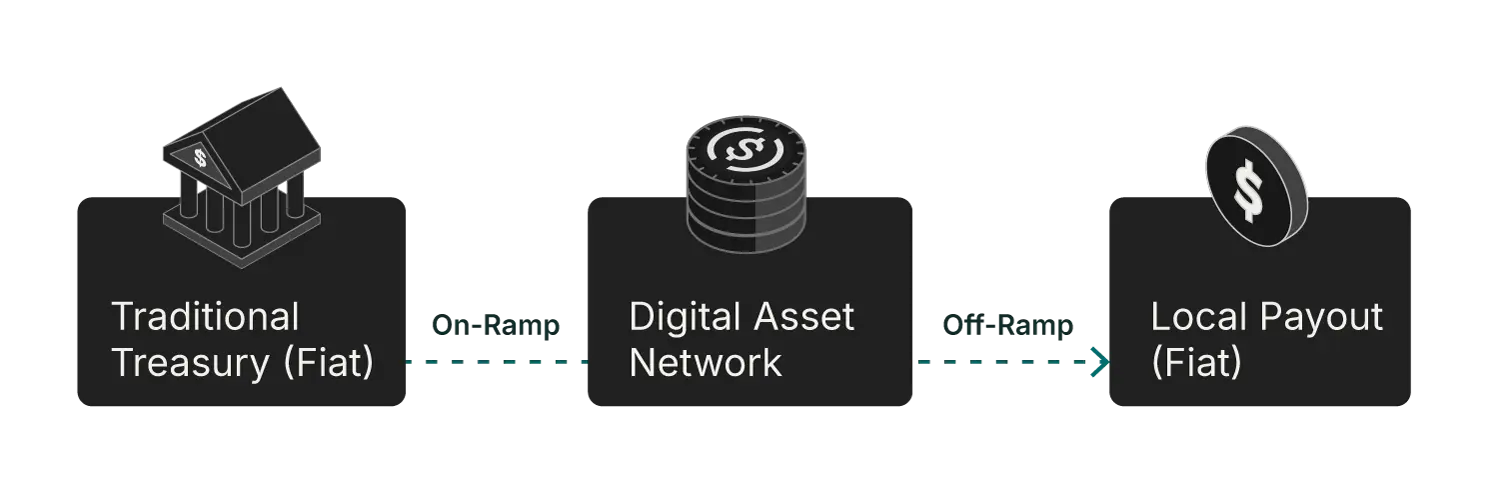
A crypto ramp is the financial infrastructure bridging traditional banking with digital assets. An on-ramp converts government-issued fiat currency (like USD or MXN) into digital assets or stablecoins. An off-ramp reverses the process, liquidating digital assets back into local fiat directly inside a company's bank account, enabling instant cross-border settlement without crypto exposure.
Nowadays, moving capital across through traditional correspondent banking frameworks is a competitive disadvantage. Faster settlement and liquidity are assets for enterprises. This is where on-ramp and off-ramp come into play.
Defining On-Ramp and Off-Ramp Mechanics
On-ramp and off-ramp refer to the institutional financial services that bridge traditional, government-issued money (fiat) with the digital asset and cryptocurrency network.
These layers provide a direct conversion mechanism, allowing corporate treasuries to route capital globally without overhauling their internal accounting workflows.
What is a Crypto On-Ramp?
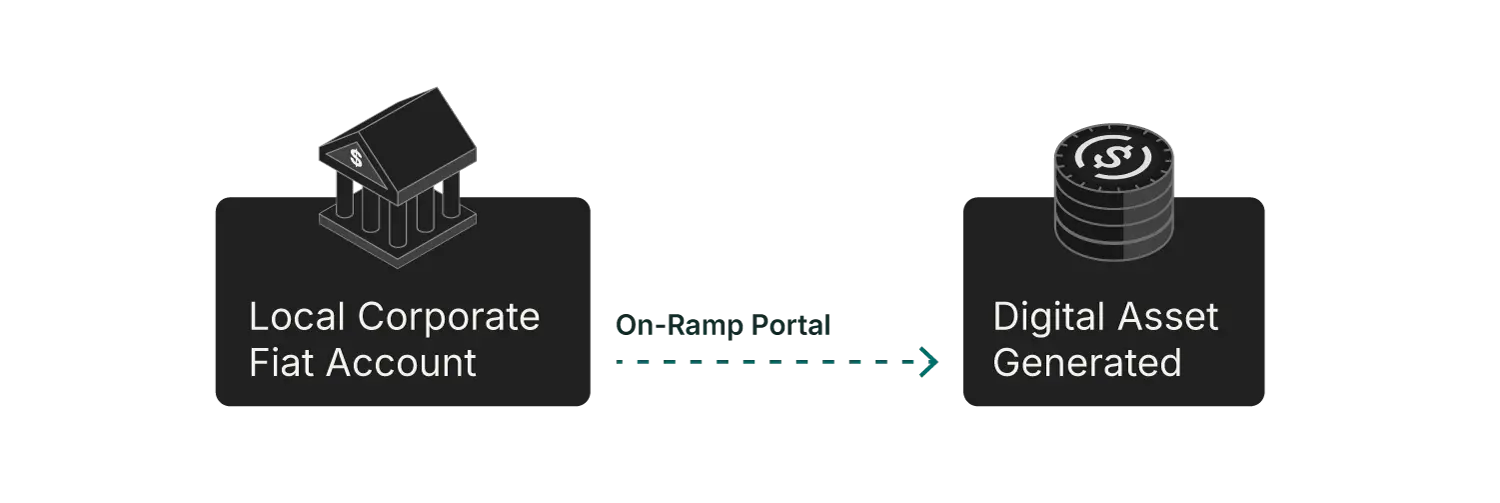
A crypto on-ramp is the operational entry point that converts traditional government-issued money (fiat currency, such as USD, MXN, or COP) into digital assets.
For an enterprise, an on-ramp functions as an automated conversion portal. Instead of requiring a treasury team to manually open retail exchange accounts or handle cryptographic keys, an institutional provider like Cobre manages the entry logic behind the scenes.
Depending on the company's financial strategy, a fiat on-ramp can channel liquidity into three primary asset classes:
- Fiat-Backed Stablecoins: Digital tokens maintaining a strict 1:1 parity with traditional fiat reserves, such as USDC, USDT. These are used as predictable, low-volatility transit vehicles for near-instant cross-border B2B settlement.
- Layer-1 Native Cryptocurrencies: Highly liquid digital assets like Bitcoin (BTC) or Ether (ETH). Multinational enterprises typically use on-ramps for these assets when managing corporate treasuries with explicit digital asset investment mandates, or when dealing with Web3 suppliers who strictly demand payment in native protocols.
- Central Bank Digital Currencies (CBDCs): Digital tokens issued and regulated directly by a sovereign central bank. On-ramping into CBDCs allows enterprises to interact directly with official state-backed digital networks as they go live globally.
What is a Crypto Off-Ramp?
A crypto off-ramp is the exit mechanism that handles the reverse process: liquidating digital assets (UDSC, BTC, ETH) back into traditional bank credit.
Once capital completes its journey across a digital routing corridor, it lands in the recipient's destination jurisdiction.
The off-ramp automatically absorbs the digital asset, converts it into the domestic currency of the receiving country (USD, MXN), and deposits it straight into a standard commercial bank account via local real-time payment rails.
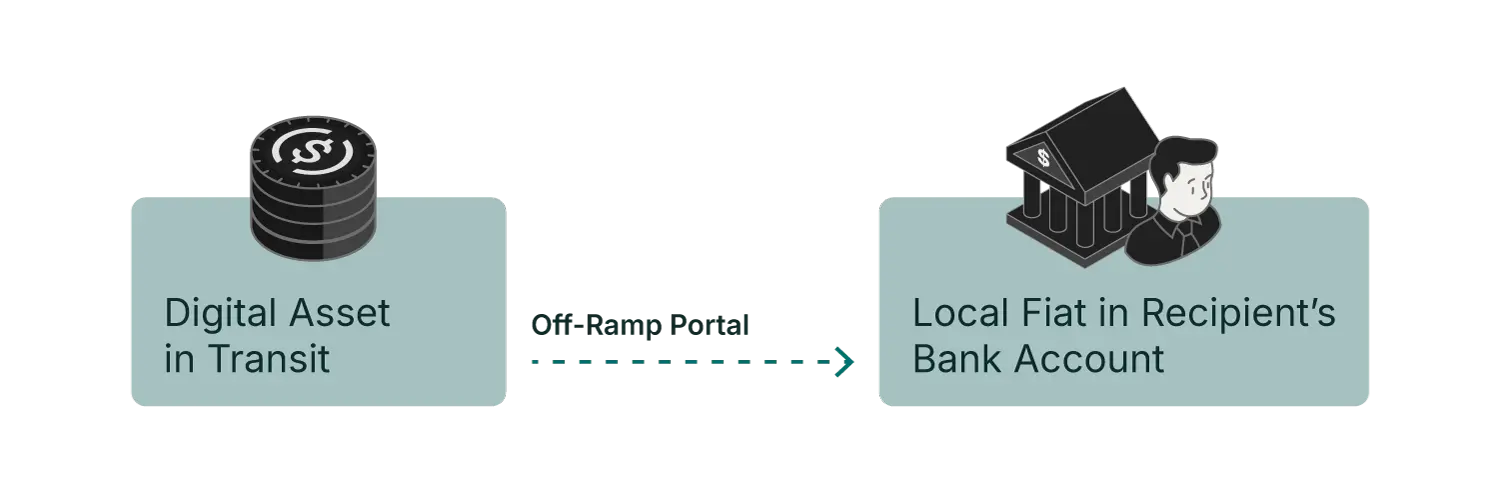
The off-ramp layer ensures that final beneficiaries receive their funds exactly like a standard domestic bank transfer.
The underlying digital asset mechanics are completely abstracted from their point of view.
The Strategic Role of Stablecoins in Corporate Ramping
While there are many styles of crypto ramps, enterprise-grade payment infrastructure demands absolute stability and price predictability.
For this reason, corporate platforms like Cobre rely exclusively on fiat-backed stablecoins such as tokenized USD as the underlying core layer for cross-border transaction tunnels.
Holding speculative digital tokens introduces balance sheet volatility and complex regulatory compliance hurdles. By focusing on stablecoin infrastructure, the transaction architecture through stablecoin sandwich ensures that a payment funded in local fiat currency retains its exact relative value as it passes through the digital tunnel and converts back into fiat at the receiving bank endpoint.
What are the core benefits of crypto ramps for enterprise treasury teams?
Integrating institutional fiat-to-crypto and crypto-to-fiat payment layers transforms standard international liquidity operations.
Automated Risk Mitigation
Because institutional orchestration layers automate the consecutive execution of the on-ramp and off-ramp, assets are held in transit for only a few minutes.
This highly compressed execution window effectively eliminates the treasury's exposure to currency fluctuations or structural market de-pegs.
You can read more about stablecoin regulations and mitigation risks in our article.
Bypassing Capital Traps
Traditional international banking rails depend on a slow chain of intermediate entities, forcing companies to maintain pre-funded accounts globally.
Utilizing modern payment platforms that bundle on- and off-ramps removes the need for regional cash pre-funding, unlocking working capital that can be deployed back into the core business.
Built-In Operational Compliance
Robust institutional crypto on-ramp providers construct their platforms around absolute transparency and tracking. Automated Know Your Customer
(KYC), Know Your Transaction (KYT), Know Your Business (KYB), and anti-money laundering (AML) protocols run natively within every transaction flow, keeping corporate cash movements aligned with local regulatory frameworks.
Modernizing Corporate Capital Routing
On-ramps and off-ramps serve as the essential, invisible infrastructure of modern B2B payments via stablecoin or tokenized payments.
They offer large enterprises the speed, 24/7 availability, and programmatic tracking of digital asset rails while allowing teams to manage risk safely within traditional local fiat frameworks.
Explore how automated infrastructure handles the complexity of international payment flows by reviewing our guide on what is a stablecoin or discover how fiat-backed stablecoins secure liquidity for business treasury.
What do "on-ramp" and "off-ramp" mean?
They are the financial bridges between traditional cash (fiat) and digital assets. An on-ramp converts local bank fiat into digital tokens. An off-ramp does the reverse, converting those tokens back into local bank cash.
Does using a crypto ramp expose my company to market volatility?
Using crypto ramps can expose your company depending on what cryptocurrency you are working on and the specific ramp you use.
If it’s a ramp for immediate transaction and it’s a stablecoin fiat-pegged, the timeframe of exposure is minimal. Stablecoins are specifically designed to maintain a stable, 1:1 value with fiat currencies.
Do our international partners need to understand crypto to get paid?
Not at all. The digital asset mechanics are a layer that operates without intervention. Your partners receive the final funds directly into their traditional commercial bank accounts as a standard domestic transfer.