













International ACH Transfers: A Guide to Latin America Cross-Border B2B Payment
Your finance team relies on ACH for domestic payments: predictable settlement, low costs, straightforward processing. Now you need to pay suppliers in Mexico or Colombia, and the question becomes clear: can international ACH transfer work for this?
The answer requires understanding three distinct concepts that often get confused.
This guide clarifies what each term means, which methods work for B2B international money transfers, and where modern payment infrastructure delivers the speed and efficiency you're seeking.
Understanding Three Different ACH Concepts
Before exploring international payment options, you need to distinguish three terms that create frequent confusion in cross-border payment discussions.
ACH Network
The ACH Network is a specific payment system operated by NACHA (National Automated Clearing House Association) in the United States.
This infrastructure connects U.S. financial institutions exclusively for domestic transactions, processing electronic funds transfers between U.S. bank accounts with typical settlement in one to three business days.
What the Automated Clearing House Network is not:
- An international payment system
- Extended to Mexico, Colombia, or any country outside the U.S.
- Capable of processing cross-border transactions directly
The ACH Network is domestic-only U.S. infrastructure. This distinction matters because it cannot handle the international payments you're researching.
Automated Clearing House Systems
Automated clearing house describes the generic concept of electronic networks for processing financial transactions.
These systems typically handle domestic, low-value payments between participating financial institutions. The critical point: each country operates its own separate automated clearing house system (also known as ACH Operator).
Examples of national ACH systems:
- United States: ACH Network (operated by NACHA)
- Mexico: SPEI (Sistema de Pagos Electrónicos Interbancarios)
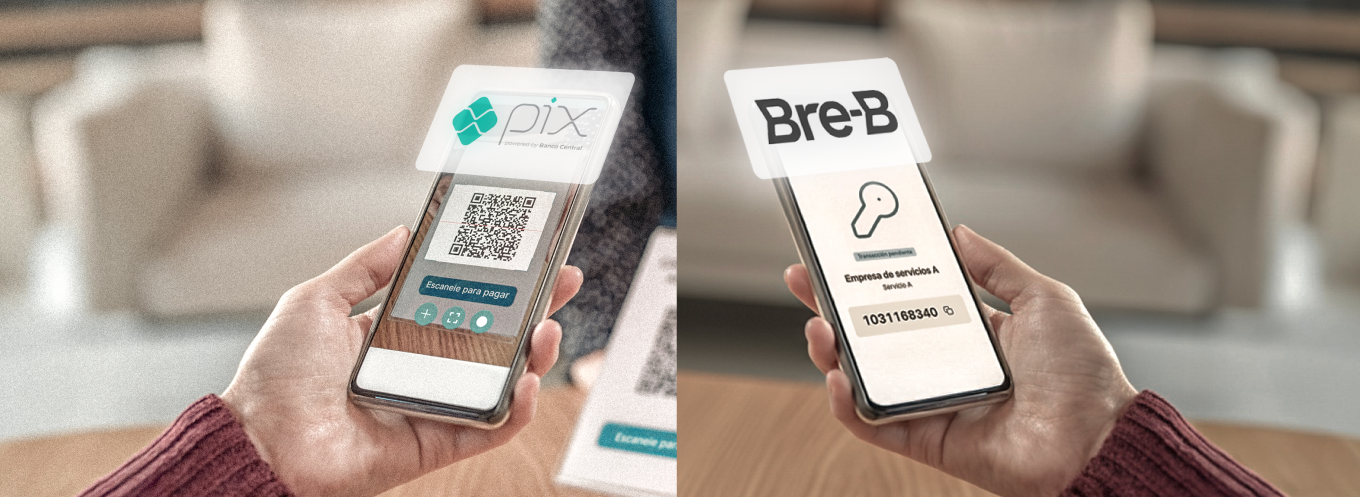
- Colombia: Bre-B (operated by Banco de la República)
- Brazil: PIX
These national systems do not communicate with each other. Mexico's SPEI does not connect to the U.S. ACH Network. Colombia's Bre-B does not connect to the U.S. ACH Network. Every country maintains its own domestic clearing house system as separate, incompatible infrastructure.
International ACH Transactions
International ACH Transactions, known as IAT, represents a specific SEC code within the U.S. ACH Network. This designation was designed for very limited cross-border payment scenarios and requires specific conditions to qualify.
IAT actually applies to:
- Consumer remittances to family members abroad
- Money transmitter services
- Specific recurring payments with foreign financial agency involvement
- Pension payments to expatriates in certain circumstances
What IAT is not:
- The primary method for B2B payments to Latin America
- Available for most standard business-to-business operations
- A way to extend the ACH Network internationally
IAT exists but serves very specific, limited use cases that rarely apply to operational B2B global payments. When finance teams look for international ACH transfer solutions, IAT typically does not address their actual needs.
Why These Terms Create Confusion?
The confusion around "international ACH transfer" stems from a fundamental mismatch between what finance teams need and what existing infrastructure actually delivers. This gap gets wider when marketing terminology obscures technical realities.
What Finance Teams Actually Need
Finance teams familiar with domestic ACH expect certain capabilities: low transaction costs, predictable settlement windows, API integration with existing systems, and reliable processing.
When international payments become necessary, the natural assumption is that similar infrastructure exists for cross-border transactions.
The reality proves more complex.
Explanations of IAT describe scenarios that don't match typical B2B operations. Services marketed as solutions often rely on the same correspondent banking infrastructure they're meant to replace.
The gap between expectation and available options leaves finance teams without straightforward answers.
Marketing Terms vs Technical Reality
Some payment providers frequently market "Global ACH" or "International ACH" services to businesses seeking international payment solutions.
This terminology suggests these services extend the familiar domestic ACH experience across borders, when they actually don't.
Thus, understanding what these terms actually represent becomes critical for evaluating options and making informed decisions about your cross-border payment infrastructure.
The technical reality behind these services:
- Cannot use the U.S. ACH Network for international transaction portions
- Rely on correspondent banking networks for settlement in destination countries
- Introduce processing delays similar to traditional wire transfers
- Represent marketing terminology rather than technical system extensions
There is no mechanism to extend the U.S. ACH Network internationally.
Services marketed as "Global ACH" use fundamentally different infrastructure than domestic ACH, despite similar branding. The processing, settlement, and operational characteristics differ substantially from the domestic ACH experience finance teams know.
This disconnect between terminology and technical infrastructure creates confusion that obscures the actual options available for cross-border B2B payments to Latin America.
How International B2B Payments Actually Work Today
When U.S. and Canadian companies pay Latin American suppliers, the dominant method remains international wire transfers through correspondent banking networks.
This infrastructure, while established, introduces multiple layers between your business and your suppliers.
The wire transfer process:
- Your originating bank receives the payment instruction
- The transaction routes through multiple correspondent banks
- Each intermediary conducts currency conversion and compliance checks
- The final receiving bank in Mexico or Colombia credits your supplier's account
Settlement timeline expectations:
- Best case scenario: 3-4 business days
- Standard processing: 4-6 business days
- Transactions with complications: 7-10 business days
Cost structure breakdown:
- Sending bank fee: US$15-35
- Intermediary bank fees: US$10-25 per correspondent
- Receiving bank fee: US$10-20
- FX spread: typically 2-3% above interbank rates
Total costs per transaction frequently exceed US$50, often reaching US$100 or more when all fees accumulate. This represents what most companies actually use for B2B payments to Latin America, not ACH or IAT.
Why Wire Transfers Dominate
The infrastructure reality shapes available options in fundamental ways.
Because the U.S. ACH Network doesn't extend to Latin America and IAT has extremely limited applicability for B2B operations, national clearing house systems remain disconnected from each other.
Correspondent banking has become the established infrastructure that bridges these separate systems, creating the multi-bank chain that processes your international payments.
Business practices have evolved to reinforce this infrastructure reality.
Banks maintain correspondent relationships built over decades, creating established pathways for international transactions. International compliance requirements flow naturally through these channels, where banks have developed expertise and processes.
Latin American suppliers expect wire transfers because they've become the standard payment method. Finance teams continue with familiar processes, often unaware that modern alternatives exist that could address the limitations they've accepted as inevitable.
Latin America's Domestic Payment Systems
For companies managing B2B payments to Latin America, understanding regional payment infrastructure reveals why traditional methods struggle.
Countries like Mexico and Colombia have built real-time payment systems; SPEI and Bre-B respectively; that operate independently from the U.S. ACH Network. These domestic systems create the infrastructure gap that impacts your cross-border payment speed and cost.
Mexico's SPEI
Mexico operates SPEI (Sistema de Pagos Electrónicos Interbancarios), a real-time electronic payment system between Mexican financial institutions managed by Banco de México (Banxico). The system processes interbank transfers exclusively within Mexico's domestic market.
H4: Operational capabilities:
- 24/7/365 availability with settlement cycles every five seconds (Banco de México)
- Near-real time processing with most transfers completing in under 30 seconds
- Internet banking access typically 6:00 AM to 5:30 PM on banking business days
- Mobile banking services generally provide full 24/7 access
H4: Transaction characteristics:
- Banco de Mexico sets no maximum transaction limit for the SPEI system itself.
- Individual banks establish their own transaction limits based on account type and transfer method.
- Connects Mexican banks, cooperatives, payment service providers, and authorized financial institutions.
- Almost instantaneous settlement between participating institutions.
H4: Access limitations:
- Domestic Mexican system only, not connected to U.S. ACH Network
- Not accessible through traditional U.S. correspondent banking relationships
- Requires local Mexican banking presence or direct platform integration
- No cross-border connectivity with other national payment systems
Colombia's Bre-B
Colombia recently launched Bre-B in September 2025 as an instant payment network between Colombian financial institutions, operated by Banco de la República de Colombia. The system enables immediate, interoperable transfers across banks, digital wallets, and cooperatives.
Cobre maintains connectivity to Bre-B as one of the early participants in the network, enabling clients to access instant settlement capabilities.
Operational capabilities:
- 24/7/365 processing year-round (Banco de la República)
- Instant settlement completing in approximately 20 seconds
- Simplified "keys" identification system (phone numbers, national ID, email, alphanumeric codes)
- Interoperability across banks, digital wallets, and cooperatives
Transaction limits:
- Maximum amount: COP 11,552,000 per transfer (approximately $2,765 USD)
- Individual banks may set lower limits for security purposes
- No fees for end users during initial three-year period
- Minimal operational charges planned for year four (approximately COP 6.46 per transaction)
Access limitations:
- Domestic Colombian system only, not connected to U.S. ACH Network
- No connection to international payment networks
- Processes only transactions between Colombian financial institutions
- Requires direct Colombian banking integration or local platform connections
The Cross-Border Challenge
These powerful domestic real-time payment systems exist as separate, incompatible national infrastructure.
SPEI operates exclusively within Mexico. Bre-B operates exclusively within Colombia. Neither system connects to the U.S. ACH Network, and the systems themselves do not interconnect with each other.
Traditional cross-border payments from the U.S. to Mexico or Colombia cannot access SPEI or Bre-B through standard correspondent banking.
Instead, these payments route through multiple correspondent banking intermediaries, with sequential currency conversion at each step, compliance checks at each institution in the chain, settlement timelines extending 3-5 business days or longer, and accumulated fees from each participating bank.
This structural limitation creates the infrastructure gap that modern payment platforms address by establishing direct connections to regional banking infrastructure, enabling access to local real-time payment systems while managing cross-border currency conversion and compliance requirements.
Beyond International ACH Payments: Direct Regional Network Access
The infrastructure gap between U.S. payment systems and Latin American real-time networks has created opportunities for purpose-built platforms that connect directly to regional payment systems, bypassing correspondent banking entirely.
Direct Regional Network Access
Modern payment platforms take a fundamentally different approach to cross-border payments. Rather than attempting to extend the U.S. ACH Network internationally or relying on correspondent banking chains, purpose-built platforms establish direct connections to regional payment systems.
The infrastructure architecture works through four key steps:
- Your U.S.-based business initiates payment through the platform
- The platform routes transactions through direct integrations with SPEI, Colombian banks, and regional systems
- Payments flow directly to local networks without correspondent intermediaries
- Settlement occurs in real-time or same-day through local infrastructure
This direct connection model delivers advantages that traditional wire transfers cannot match. It eliminates the correspondent banking chain entirely, enabling access to real-time local payment systems like SPEI and Bre-B.
Processing operates 24/7/365 without banking hour restrictions. Currency conversion occurs at transparent rates without hidden spreads. API-first integration connects directly with your existing business systems, automating workflows that wire transfers handle manually.
Cobre Cross-Border Payments in action
Our platform streamlines the entire cross-border payment process into five clear steps:
- Initiate money movement in USD from your U.S. balance to COP, MXN, PEN or through Cobre's platform
- Use Rate Lock to secure your rate for up to 72 hours, protecting against FX volatility while you finalize funding
- Currency conversion and routing happen automatically, Cobre handles conversion at transparent, real-time rates and delivers local currency through SPEI or Colombian banking infrastructure
- Same-day settlement with your supplier receiving pesos in their local account and complete traceability from origin to destination
The distinction from wire transfers becomes clear in operational reality.
Cobre Cross-Border Payments replaces the 2-3 correspondent banks that traditional transfers require, processing transactions 24/7/365 without banking hour restrictions.
Our platform delivers transparent pricing instead of hidden intermediary fees at each step. Real-time tracking provides complete visibility from origin to destination, replacing the opaque correspondent routing where you cannot see transaction status.
API-first infrastructure enables automated payment initiation and real-time reconciliation, eliminating the manual portal access that wire transfers demand for each transaction.
Cobre Cross-Border Payments delivers what finance teams hope to find when searching for international ACH transfer options: the speed, cost efficiency, and operational simplicity of domestic ACH, but purpose-built for Latin American B2B operations.
Detailed Comparison of Payment Methods
Settlement Speed
Understanding settlement timelines helps finance teams plan cash flow and manage supplier relationships effectively.
International ACH (IAT):
- Typical timeline: Limited applicability
- Best case: 1-3 days for domestic portion
- Worst case: N/A for most B2B operations
International Wire Transfer:
- Typical timeline: 4-6 business days
- Best case: 3-4 business days
- Worst case: 7-10+ business days
Cobre:
- Typical timeline: Under 24 hours
- Best case: Under 6 minutes for local payments
- Worst case: 24 hours for complex transactions
Cost Structure
Total payment costs include transaction fees, currency conversion, and intermediary charges that accumulate throughout the process.
International ACH (IAT):
- Per-transaction cost: Varies by provider
- FX transparency: Depends on service
- Hidden fees: Potential intermediary fees
International Wire Transfer:
- Per-transaction cost: High cumulative costs
- FX transparency: Hidden spreads
- Hidden fees: Multiple intermediaries
Cobre:
- Per-transaction cost: Transparent competitive pricing
- FX transparency: Real-time transparent rates
- Hidden fees: None
Operational Capabilities
Integration with existing business systems determines operational efficiency and manual workload requirements.
API Integration:
- Wire Transfers: Rarely available
- IAT: Limited
- Cobre: Full API access
Real-time Tracking:
- Wire Transfers: None
- IAT: Limited
- Cobre: Complete visibility
Automated Reconciliation:
- Wire Transfers: Manual
- IAT: Manual
- Cobre: Automated
Bulk Processing:
- Wire Transfers: Limited
- IAT: Limited
- Cobre: Native support
24/7 Processing:
- Wire Transfers: Banking hours only
- IAT: Banking hours only
- Cobre: 24/7/365
When to Use Each Method
International Wire Transfers
International wire transfers remain appropriate for specific situations despite their limitations. Consider wire transfers when making one-time large payments to countries outside supported regions, or when paying suppliers who only accept this method.
Wire transfers also make sense for businesses processing fewer than ten international transactions monthly, where platform setup may not justify the volume.
Certain compliance requirements mandate wire transfer documentation, making this method necessary regardless of preference. Emergency same-day processing needs, when cost becomes secondary to speed, also favor wire transfers over other options.
International ACH Transactions
International ACH transfers applies to very specific business models and regulatory scenarios. Businesses operating as money transmitters or processing consumer remittances as their core business function typically require IAT transactions.
When your specific use case matches NACHA rules IAT scenarios exactly, or regulatory requirements explicitly mandate IAT SEC code usage, this method becomes necessary.
Foreign financial agency involvement that meets International ACH transfers definition criteria also triggers this requirement. For standard B2B operations to Latin America, IAT typically does not apply.
Modern Payment Platforms, like Cobre
Modern payment platforms deliver the most value for recurring cross-border operations. Consider these platforms when processing recurring B2B payments to Mexico or Colombia, or handling more than ten international transactions monthly.
These platforms excel when you need:
- Real-time visibility and transaction tracking
- Infrastructure supporting Latin American expansion
- Elimination of correspondent banking delays
- Transparent FX rates without hidden spreads
- Unified treasury management across multiple countries
The operational efficiency, cost savings, and visibility provided by modern platforms compound with transaction volume, making them ideal for businesses with established or growing Latin American supplier relationships.
Transform Your Cross-Border Operations
Your finance team shouldn't spend hours managing wire transfer portals, waiting days for settlement confirmations, or reconciling opaque fee structures.
Latin American suppliers deserve the same payment reliability and speed as your domestic vendors.
Modern payment infrastructure makes this possible. Direct connections to regional banking systems deliver same-day settlement, transparent pricing, and complete visibility across all your Latin American operations.
Ready to see how it works? Reach out to Cobre's team to explore what's possible for your business.
Frequently Asked Questions
Can I use ACH transfer for international payments to Latin America?
No. The ACH system operated by the National Automated Clearing House Association only processes domestic US transactions. Cross border payments to Latin America typically use international bank wire transfers through the SWIFT network or modern platforms with direct payment rails connections.
What is the difference between Global ACH and international wire transfers?
Global ACH is a marketing term for services that still rely on foreign correspondent banks for settlement. International wires use the SWIFT network with multiple intermediaries. Both involve currency conversion fees and similar processing times, unlike true domestic ACH transfers.
How do international payments to Latin America actually work?
Most international payments to Latin America use bank wire transfers through the SWIFT network with foreign correspondent banks. These bank-to-bank payments involve currency conversion fees and typically take three to five business days. Modern platforms bypass this payment chain with direct regional connections.
What is IAT and does it work for B2B payments to Mexico or Colombia?
IAT (International ACH Transaction) is a specific code within the US ACH system for limited scenarios like remittance transfers and money transmitter services. It does not apply to most B2B operations. Standard business payments to Latin America use international wires or modern payment rails instead.
Are Global ACH Transfers cheaper than bank wire transfers?
Global ACH Transfers and bank wires both involve foreign correspondent banks, currency conversion fees, and similar cost structures. Actual savings depend on foreign exchange rates, payment details, and intermediary fees. Modern payment processing platforms often provide more transparent pricing than either option.
What compliance is required for international money transfers?
International payments require Office of Foreign Assets Control screening, anti-money laundering checks, and compliance with foreign asset control regulations. Each payment chain participant conducts OFAC screening indicators review. Modern platforms manage these fraud prevention measures through established banking relationships.